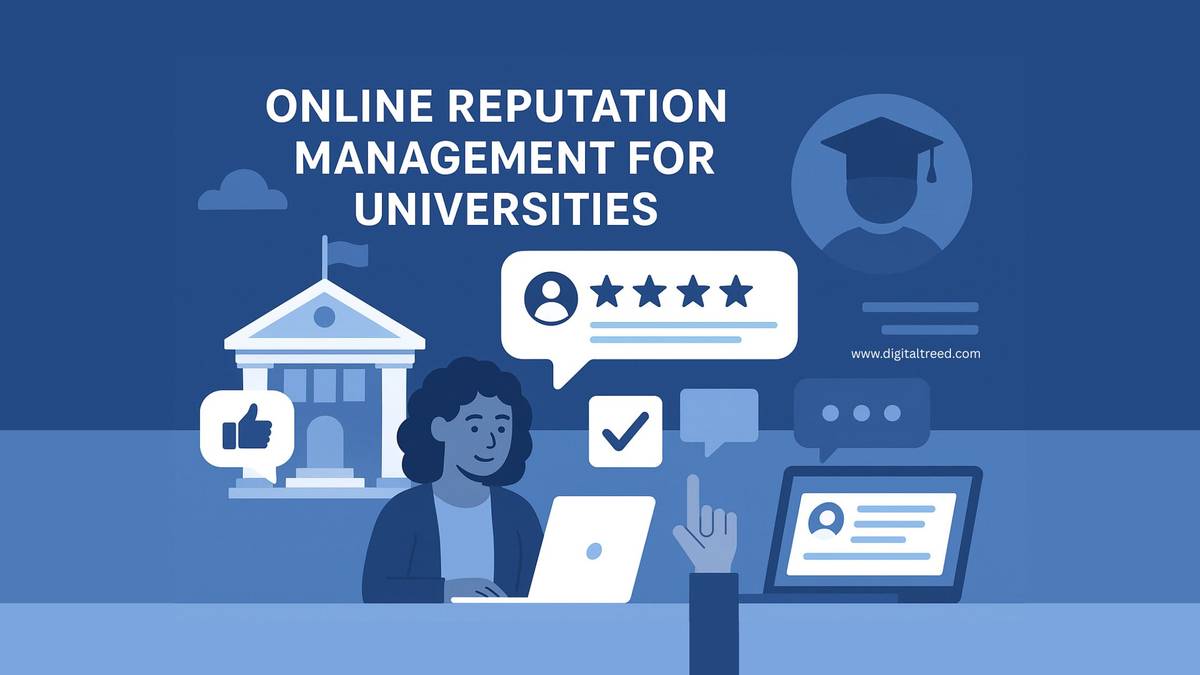
Online Reputation Management for Universities: Why Students, Faculty, and Administration All Play a Role
- November 20, 2025
- Aijaz Alam
- Blogs
A university’s reputation is one of its most valuable assets. It influences enrollment, partnerships, faculty recruitment, alumni engagement, and even the perceived value of its degrees. But online reputation management for universities is no longer just a responsibility of the communications or PR department. In reality, reputation is shaped publicly and continuously by actions, voices, and digital traces across the entire campus community.
In a digital environment where impressions form quickly and content spreads instantly, every student, staff member, and administrator plays a part in how a university is seen—and remembered.
Why Reputation in Higher Education Matters
A university’s reputation is not built on marketing language or rankings alone. It reflects how internal culture and external perception align.
A strong reputation can:
- Attract high-performing students and faculty
- Strengthen grant and research opportunities
- Improve graduate employment outcomes
- Enhance alumni loyalty and donor engagement
Conversely, reputation challenges—whether from academic scandals, student conduct incidents, or slow institutional responses to public concerns—can have long-term consequences.
Universities operate in a highly visible environment. How they respond matters as much as what happened.
Students Shape Reputation Every Day
Students are not just recipients of a university’s identity—they actively create it. Their online presence, academic engagement, campus involvement, and public communication contribute to how the institution is perceived.
A single moment can influence perception:
- Positive: Service projects, academic awards, leadership roles, advocacy efforts
- Negative: Social media controversies, plagiarism cases, misconduct reports
Student experiences and behavior often act as shorthand for institutional values. Fair or not, the public often views “the student body” as a reflection of culture and community standards.
Faculty Influence Academic Reputation and Public Credibility
Faculty shape reputation through:
- Research output and publications
- Public commentary and media interviews
- Classroom experience and mentorship
- Professional and industry relationships
Faculty voices often carry authority. Their expertise can strengthen institutional positioning—but inconsistency, public disputes, or controversial statements can also create reputational strain.
Supporting faculty in how they communicate and engage publicly is part of responsible reputation management.
Administrative Leadership Sets the Tone
Administration shapes:
- Policy
- Crisis response
- Transparency standards
- Long-term strategic direction
When leadership communicates clearly, responds promptly to concerns, and demonstrates accountability, it builds trust both inside and outside the institution.
When communications appear slow, defensive, or opaque, trust erodes quickly.
In higher education, how a university responds matters as much as what it says.
Social Media: The Real-Time Reputation Engine
Universities exist in a continuous online conversation. Mentions, comments, videos, and local news coverage can influence perception in minutes.
Effective university reputation management includes:
- Monitoring social platforms and public forums
- Responding thoughtfully to emerging issues
- Highlighting student and faculty achievements consistently
- Encouraging responsible digital citizenship
The goal is not control—it’s awareness and timely, informed engagement.
Rebuilding After Reputation Challenges
Reputation recovery in higher education requires transparency, participation, and real improvement—not public relations spin.
Key principles:
- Acknowledge issues directly and clearly
- Communicate steps being taken to address them
- Demonstrate progress through visible action
- Involve students, faculty, and staff in the solution, not just the message
Reputation repair is not about erasing the past. It is about demonstrating a credible commitment to doing better.
Shared Reputation, Shared Responsibility
A university’s reputation does not live in mission statements or promotional campaigns. It lives in:
- Classrooms
- Research labs
- Dorm rooms
- Group chats
- Campus events
- Social feeds
When students feel supported, faculty feel heard, and leadership communicates with transparency and respect, reputation becomes a collective strength rather than a reactive task.
Online reputation management for universities works best when the entire community participates—because the institution's reputation ultimately reflects the people who shape it every day.

Aijaz Alam is a highly experienced digital marketing professional with over 10 years in the field. He is recognized as an author, trainer, and consultant, bringing a wealth of expertise to his work. Throughout his career, Aijaz has worked with companies such as Arena Animation (Aptech Ltd) and Matik Sports Private Limited. He previously operated a successful digital marketing website, Whatadigital.com, where he served an impressive roster of Fortune 250 companies. Currently, Aijaz is the proud founder and CEO of Digitaltreed.com.

About us and this blog
We are a digital marketing company with a focus on helping our customers achieve great results across several key areas.
Request a free quote
We offer professional SEO services that help websites increase their organic search score drastically in order to compete for the highest rankings even when it comes to highly competitive keywords.
Subscribe to our newsletter!
More from our blog
See all posts