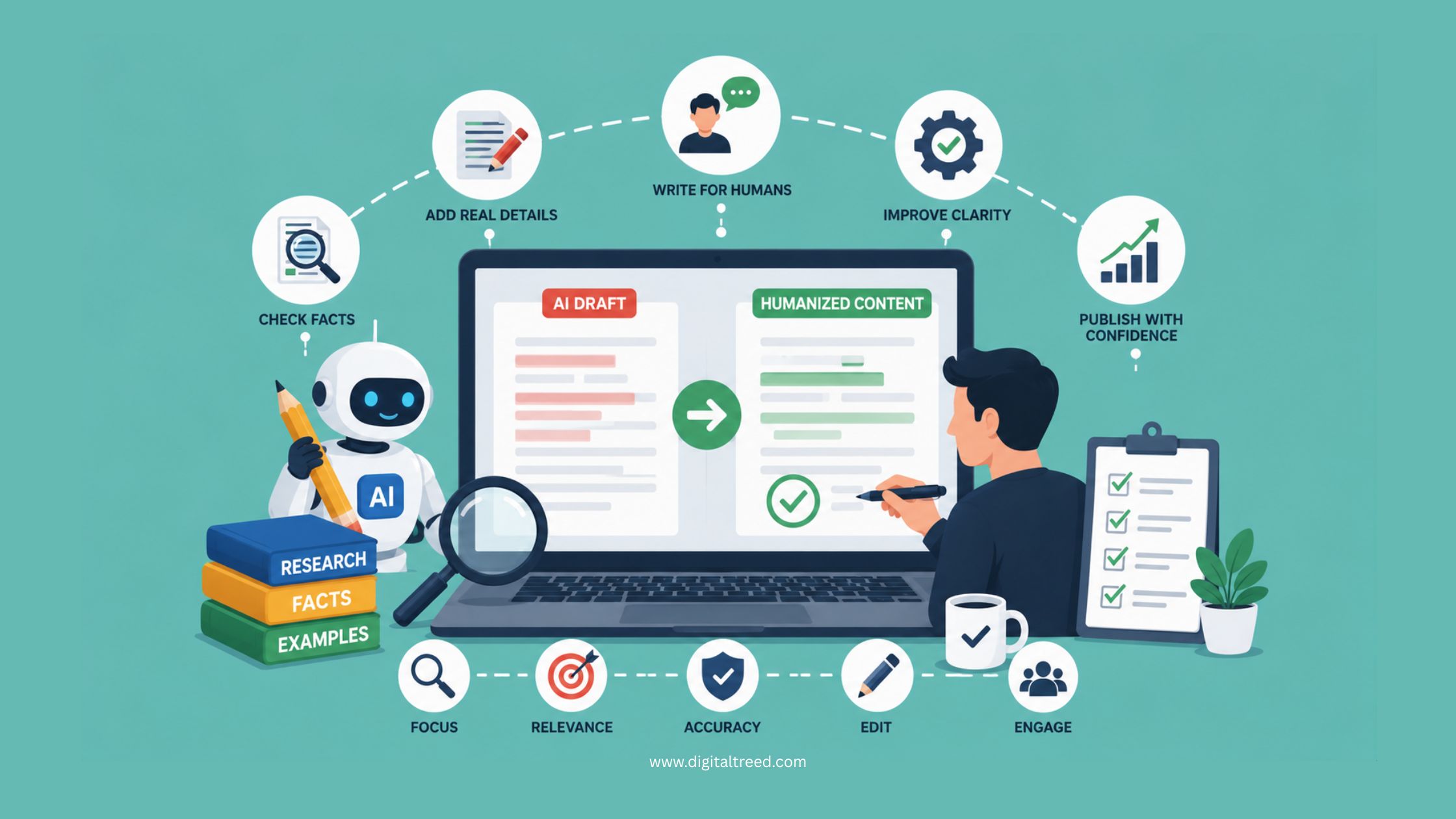
AI can prepare a complete draft within several minutes. However, quick writing still needs careful review before publication. Generated text may repeat ideas or include unsupported claims. Readers notice these problems when advice sounds broad or disconnected.
Your editing process should fix meaning before polishing sentence style. A useful article should answer questions without wasting anyone’s time.
Start With the Reader’s Main Question
Begin by asking why someone opened your article today. Your title should promise one clear answer from the beginning onward. Review every heading and remove sections that lead elsewhere.
Use these checks during your first detailed review:
- Your introduction should explain the benefit in several direct sentences.
- Each heading should answer one part of the central question.
- Every paragraph should provide information readers can apply immediately.
- Your conclusion should guide readers toward one practical next step.
This review prevents you from polishing sections nobody actually needs.
Replace Empty Claims With Real Details
Generated drafts may include statements that explain almost nothing. A sentence claiming that something saves time needs proof. Tell readers which task takes less time and explain why.
You can humanize AI content by adding details from research. Include an example from your own process or recent testing. Mention any limits readers should understand before following the advice.
For example, never claim that a platform improves every article. Explain which feature helped you fix one confusing paragraph. Specific details give your readers something useful to test.
Check Every Important Fact
Never trust a generated claim without checking its original source. Mark every price, date, name, statistic, and product feature. Open the source page and compare each statement carefully.
Review these changing details before approving any section:
- Pricing information may change after your first research session.
- Product limits may differ across several monthly subscription plans.
- Study findings may cover only one country or group.
- Legal guidance may depend on each reader’s current location.
Remove any claim that lacks reliable evidence from your research.
Rewrite Repeated Patterns Carefully
Several generated paragraphs may begin in the same way. Similar sentence lengths can make a section sound mechanical. Read each paragraph aloud and mark repeated openings carefully.
Change only the lines causing the problem in context. Combine related ideas when separate lines sound unnatural together. Split crowded explanations when readers may lose the main point.
A paraphrasing tool can suggest alternatives for one difficult sentence. Compare each suggestion with your original meaning before accepting it. Automatic changes may replace technical terms or alter key claims.
Shorten Long Sections Without Losing Value
Long drafts may hide useful answers under repeated background details. A summarizer can help identify the central point quickly. Use its result as guidance rather than a finished copy.
Keep examples that show readers how your advice works. Remove repeated explanations before deleting any useful supporting example. Restore warnings whenever shortened text removes an important limit.
Use this four-step process during your shortening review:
- Write the section’s main question above each paragraph first.
- Mark every sentence that directly answers the central question.
- Delete repeated points before removing any useful supporting examples.
- Review the shorter section for missing facts or context.
Review Language and Detection Results
Complete structural edits before checking smaller language problems carefully. A grammar checker can then find punctuation or tense issues. Review every suggestion because software may misunderstand industry terms.
Replace unclear pronouns with the exact product or person. Check verb tense when describing tests completed in the past. Read the revised section aloud before approving final changes.
An AI detector may highlight passages with predictable patterns. However, one percentage cannot prove who produced the text. Human writing can receive a high score by mistake.
Test the full article before reviewing smaller sections separately. Examine flagged passages for repetition or unsupported claims carefully. Never change correct facts only to reduce one's score.
Review Images and Complete the Final Check
Text review forms only one part of publishing work. Check screenshots for private details before uploading them online. Add alt text explaining what each image teaches readers.
A remove background feature may help with product pictures. Inspect every image edge after the processing work finishes. Automatic cutting can remove part of the product itself.
Preview your complete page on a smaller mobile screen. Oversized images can cause difficult scrolling for mobile visitors.
Before publishing, check these final five important points:
- Every claim has a reliable source you personally checked.
- Your examples show readers how to apply each recommendation.
- All links open the correct pages without unwanted redirects.
- Uploaded images display properly across desktop and mobile screens.
- The ending gives readers one clear action to follow.
Good editing requires human judgment throughout the entire process. Tools can support individual tasks, but you control publication. Focus on accuracy before checking style or detection scores. Your final article should respect every reader’s limited time.

Aijaz Alam is a highly experienced digital marketing professional with over 10 years in the field. He is recognized as an author, trainer, and consultant, bringing a wealth of expertise to his work. Throughout his career, Aijaz has worked with companies such as Arena Animation (Aptech Ltd) and Matik Sports Private Limited. He previously operated a successful digital marketing website, Whatadigital.com, where he served an impressive roster of Fortune 250 companies. Currently, Aijaz is the proud founder and CEO of Digitaltreed.com.

About us and this blog
We are a digital marketing company with a focus on helping our customers achieve great results across several key areas.
Request a free quote
We offer professional SEO services that help websites increase their organic search score drastically in order to compete for the highest rankings even when it comes to highly competitive keywords.
Subscribe to our newsletter!
More from our blog
See all posts